
Choose the Right Ceramic Sintering Route for Your Part
Compare process routes, material families, geometry, service conditions and acceptance requirements before requesting a quote for technical ceramic components.
What to Evaluate Before Quoting a Technical Ceramic Component
Evaluate process selection through the requirements that make industrial ceramic parts and custom ceramic components quotable, manufacturable and suitable for service.
Control Drawing Revisions
Start with the current drawing revision, marked changes and critical dimensions so quotation discussions reflect the part your team actually needs.
Confirm Material Grade
Treat alumina, zirconia, silicon carbide and other material families as starting points; confirm the project-specific grade, additives and required property expectations.
Match Geometry To Process
Review wall sections, openings, length-to-diameter relationships and shrinkage-sensitive dimensions when assessing whether a proposed sintering route suits the component geometry.
Compare Sintering Routes
Use ceramic sintering methods explained here to compare pressureless, pressure-assisted and other routes against material behavior, density goals, geometry and application priorities.
Define Functional Surfaces
Identify mating surfaces, sealing areas, holes, threads and finish requirements early, because these features can influence forming, finishing and acceptance decisions.
Specify Inspection Evidence
Agree which dimensions, tolerances, material information, test results and documentation must accompany the part before production approval or incoming inspection.
Our Capabilities
Explore ceramic materials, component forms, application considerations and sourcing resources for drawing-led industrial projects.

Ceramic Manufacturing Capabilities
Ceramic manufacturing capabilities cover forming, machining and inspection considerations for tubes, rods, rings, substrates and other technical components. Share the current drawing, material designation, quantity, service conditions and acceptance criteria so manufacturing requirements can be reviewed against the project.
Discuss Your Ceramic Part
Ceramic Solutions by Industry
Ceramic solutions by industry connect advanced ceramics applications with the operating demands of equipment builders, industrial systems and project teams. Define temperature, electrical, chemical, wear, insulation or dimensional requirements to identify relevant component options and open questions for quotation.
Discuss Your Ceramic Part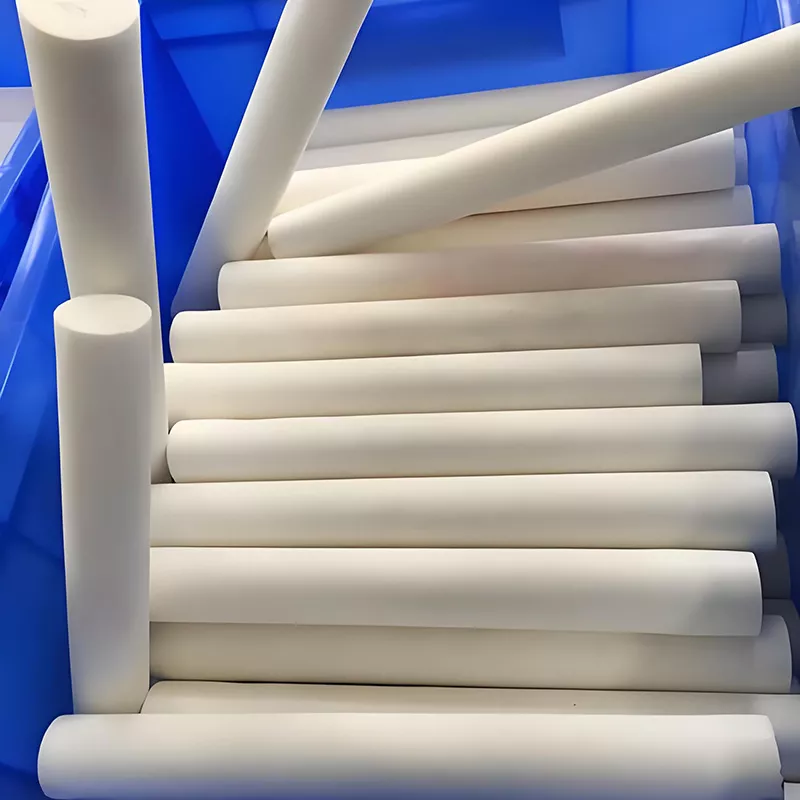
Advanced Ceramic Materials
Advanced ceramic materials include alumina ceramics, zirconia ceramics, silicon carbide ceramics, silicon nitride, aluminum nitride, boron nitride and other specialty families. Selection should be tied to the required grade, geometry, mating surfaces, service conditions and project-specific acceptance criteria.
Discuss Your Ceramic Part
Technical Ceramic Products
Technical ceramic products include ceramic tubes, rods, rings, substrates and other engineered components for industrial assemblies. Product illustrations indicate common forms; final dimensions, tolerances, material grade, documentation, delivery and commercial terms require confirmation for each project.
Discuss Your Ceramic Part
Technical Ceramic Resources
Technical ceramic resources provide a practical guide to material families, component forms and drawing-led inquiry preparation. Use them to clarify application requirements, compare general material considerations and prepare the information needed for a more concrete sourcing discussion.
Discuss Your Ceramic PartFrom Process Route to a Quotable Ceramic Part
Use each route as a starting point, then confirm material grade, geometry, service conditions, tolerances and acceptance criteria before quoting. Reference: https://great-ceramic.com/sintering-methods-for-sic-ceramics
← Swipe left or right to view →
From Ceramic Sintering Methods Explained to a Quotable Part
Turn process knowledge into a drawing-led inquiry with the details needed for clearer ceramic sourcing discussions.
Define the Geometry
Share the current drawing revision, component form, critical dimensions, mating surfaces and tolerances that determine fit, assembly and downstream inspection.
Confirm the Material Route
Identify the material family or designation, then discuss whether oxide, nitride, carbide or specialty ceramic options suit the operating environment.
Specify Service Conditions
Describe temperature, electrical, chemical, mechanical and wear conditions, along with expected loading or cycling, so process and grade discussions remain project-specific.
Set Acceptance Criteria
State quantity, documentation, inspection methods and acceptance criteria, separating essential requirements from preferences before Porcecore prepares a quotation basis for review.
Ceramic sintering methods explained: 7 key routes for engineering buyers
Use this decision framework to match ceramic sintering routes to material, geometry, performance, volume, and cost requirements while evaluating suppliers and avoiding common qualification and procurement mistakes.
1. What Are Ceramic Sintering Methods Explained?
Sintering heats a shaped ceramic body below its melting point until powder particles bond through solid-state diffusion or a liquid-assisted mechanism. As necks form, pores contract and the body shrinks; excessive grain growth can change strength, thermal conductivity or electrical behavior.
The result depends on powder preparation, green-body forming and the firing cycle. Particle size, binder content, compaction uniformity, heating rate, peak temperature, hold time, atmosphere and cooling rate all influence final density and dimensional change. The green body must therefore be treated as the starting geometry, not the finished part.
2. The Evolution of Ceramic Sintering Methods Explained
Conventional pressureless firing consolidated shaped ceramic powders through controlled heating below melting. Later pressure-assisted routes improved densification for difficult materials, while atmosphere control became more deliberate for binder removal and oxidation or decomposition control. Equipment size, tooling, distortion allowances and part geometry still constrain route selection. The appropriate process therefore depends on chemistry, geometry, density target, atmosphere, thermal history and available equipment—not simply kiln temperature.
3. Types of Ceramic Sintering Methods Explained
Seven routes cover common industrial ceramic programs, from atmospheric firing to pressure-assisted densification. The practical trade-off depends on buyer priorities such as maximum density, complex geometry, cycle time, production scale and tooling burden.
| Route | Mechanism | Best Fit | Buyer Trade-Off |
|---|---|---|---|
| Pressureless | Heat only; solid-state diffusion | Oxides; complex shapes; mature production | Moderate-high density; scalable throughput; low tooling; lowest cost, but shrinkage needs control |
| Liquid-Phase | Additive melts and wets particles | Difficult-to-densify ceramics; larger parts | Faster densification and high density; chemistry control and residual phases add risk |
| Hot Pressing | Uniaxial pressure plus heat | Flat, simple, small-to-medium parts | Very dense and fine-grained; excellent properties, but dies limit geometry and raise cost |
| Hot Isostatic Pressing | Uniform inert-gas pressure and heat | Critical, near-net or enclosed parts | High, uniform density; costly equipment, encapsulation, and slower batch economics |
| Microwave | Volumetric electromagnetic heating | Selected ceramics and rapid-cycle trials | Potentially faster and energy-efficient; penetration, uniformity, and scale-up require validation |
| Spark Plasma | Pulsed current, pressure, rapid heating | Fine-grained specialty parts; development | Very rapid, dense output; conductive tooling, small work envelope, and high capital cost |
| Reaction | In-situ chemical reaction forms ceramic | SiC and selected porous or shaped bodies | Complex forms and lower-temperature forming; residual porosity, dimensional change, and property limits |
Read The Trade-Offs
Buyer priorities matter: maximum density, complex geometry, cycle time, production scale or the lowest tooling burden can point toward different routes.
Production Versus Development
Production maturity matters. Pressureless and liquid-phase routes may suit established production, while microwave and spark plasma routes often require supplier-specific validation.
Specify Before Quoting
Before quoting, provide the material grade, geometry, mating surfaces, quantity, tolerances, service conditions and acceptance criteria.
4. Ceramic Materials and Sintering Route Compatibility
Six ceramic families can require different heat, atmosphere, additive, and pressure strategies because bonding and shrinkage behavior vary.
| Material family | Compatible routes | Key risks | Typical applications |
|---|---|---|---|
| Alumina | Pressureless, HIP | Shrinkage, warpage | Insulators, tubes |
| Zirconia | Pressureless, HIP | Phase control, distortion | Wear parts, seals |
| Silicon carbide | Pressureless, hot press | Additive effects, pores | Heat exchangers, fixtures |
| Silicon nitride | Gas pressure, HIP | Atmosphere, decomposition | Bearings, valves |
| Porcelain | Viscous-phase | Glass phase, deformation | Insulators, housings |
| Other ceramics | Route depends on grade | Chemistry mismatch | Custom components |
Powder And Green Density
5–2 μm particles generally pack more uniformly, while binder content, spray-dried granules, and compaction determine green density. Higher green density usually reduces firing shrinkage variation, but does not eliminate distortion. Powder purity matters: trace impurities may aid liquid-phase sintering or create unwanted glassy phases.
Route Matching By Family
Alumina and porcelain commonly suit pressureless or viscous routes; zirconia needs controlled atmosphere and phase-stabilizing additives. Silicon carbide and silicon nitride often need sintering aids, inert or reducing atmospheres, and sometimes pressure because covalent bonding limits diffusion. Hot pressing, gas-pressure sintering, or HIP can improve density but raise tooling and dimensional-risk considerations.
Shrinkage And Tolerance Control
2–20% linear shrinkage can occur across ceramic processes, depending on powder, forming method, and green density; actual values require a process trial. Uneven sections, holes, and constrained surfaces amplify warpage risk.
5. Customization, Surface Finish, and Decoration Options
Three variables—forming method, shrinkage, and finishing route—shape whether a ceramic component can hold holes, thin walls, threads, curves, and mating tolerances.
Forming And Machining Effects
Green machining can form holes, curves, and threads, but sintering causes shrinkage and distortion; thin walls and internal features therefore need process-specific allowances. Post-sinter diamond machining improves critical fits but adds inspection time, scrap exposure, and cost.
Finish And Decoration Choices
Glazing, coloring, metallization, and coatings are finishing or decoration steps; they do not replace densification. Surface appearance may depend on glaze coverage, firing compatibility, masking, and color variation, so specify gloss, color reference, coating thickness, and functional insulation or solderability.
Requirements To Freeze
Customization risk rises when a design combines deep holes, sharp transitions, thin walls, tight tolerances, or multiple cosmetic zones. Before quoting, freeze material grade, geometry, roughness, color or glaze, metallization or coating, inspection method, documentation, and acceptance limits.
6. Key Construction and Quality Elements
Three control layers govern repeatability: powder preparation, thermal processing, and final inspection.
Powder And Forming Control
0 Powder lots require controlled particle size, mixing, binder content, and forming pressure; spray drying, pressing, extrusion, or casting should be defined by the part geometry.
Thermal Process Stability
0 Binder burnout must prevent cracking, while kiln uniformity, atmosphere, loading pattern, and firing curve control density, warpage, and dimensional shrinkage.
Inspection And Defect Analysis
0 Final checks should cover dimensions, density, strength, surface condition, and critical mating features against an approved inspection plan.
7. How to Choose a Ceramic Sintering Manufacturer
A 1-page supplier review should connect ceramic sintering methods explained to the material, geometry, service conditions, and acceptance criteria.
Material And Route Fit
One drawing review should identify material expertise, route selection, shrinkage assumptions, tooling design, and mating-surface risks. Ask which sintering route fits the grade and geometry, and why. Three practical questions are: Can you run a trial?
Capacity And Dimensional Control
One production plan should state furnace capacity, atmosphere control, tooling limits, batch size, expected lead time, and tolerance capability after firing and finishing. Request inspection methods for critical dimensions, density, defects, and surface condition.
Qualification And Accountability
A first-article approval should define samples, test reports, documentation, packaging, and acceptance criteria. Ask how engineering changes receive approval and how records remain traceable.
8. Common Buyer Mistakes When Selecting Sintering Methods
Choosing among ceramic sintering methods explained by temperature alone creates avoidable risk.
Process Variables Beyond Temperature
Shrinkage and atmosphere determine whether a green body reaches final dimensions and chemistry. Ask: ‘What shrinkage range and gas conditions apply to this grade, geometry, and loading?’ com/news/introduction-to-sintering-techniques-of-advanced-ceramic. Binder burnout is equally critical; rushed removal can cause cracking, blistering, or internal defects.
Tolerance And Quote Discipline
Tight tolerances specified before shrinkage mapping may be unrealistic or unnecessarily expensive. Ask: ‘Which dimensions are functional, and which can be finish-machined after firing?’
Validation And Acceptance
Prototype validation exposes distortion, fit, surface, and performance problems before production tooling or volume commitment. Ask: ‘What sample quantity and inspection plan will verify the drawing?’ Acceptance criteria should name critical dimensions, density or electrical requirements where applicable, surface limits, test methods, and documentation.
9. Steps to Launch a Ceramic Component Program
A launch sequence turns ceramic sintering methods explained into controlled procurement decisions.
Define Requirements And Material
1. Start with the component drawing, mating surfaces, service temperature, loads, chemistry, electrical role, quantity, and inspection needs. Select a candidate ceramic family only after these requirements are recorded. 2.
Design And Shortlist Suppliers
2. Review shrinkage allowances, wall thickness, radii, datum strategy, machining stock, and sintering support with the supplier. Mark every dimension as critical, reference, or adjustable. 3. Compare suppliers against process fit, tooling approach, inspection capability, communication, and documentation.
Pilot, Qualify, And Release
4. Define pilot quantities and a test plan covering dimensions, density, strength, electrical or thermal properties, surface condition, and visual acceptance. Record results against the approved revision. 5. Release recurring production only after qualification approval, packaging validation, inspection records, change-control rules, and delivery terms are documented.
10. Ceramic Sintering Pricing and Cost Drivers
1 quote should separate material grade, powder preparation, forming method, tooling, furnace route, cycle time, atmosphere, pressure, machining, inspection, yield, packaging, and qualification. A ceramic sintering methods explained comparison is meaningful only when these inputs and the drawing revision are held constant. 2 quantity tiers can change setup allocation and yield exposure more than the nominal powder cost.
| Cost driver or tier | Indicative price field | Lead-time implication | Comparison note |
|---|---|---|---|
| Material and powder preparation | Supplier quote: $___/kg or $___/part | Grade confirmation and powder preparation may add ___ days | Compare grade, purity, additives, and lot requirements |
| Forming, tooling, and batch size | Tooling: $___; setup: $___; unit: $___ | Tooling and first-article approval add ___ weeks | Separate one-time tooling from recurring unit cost |
| Furnace route, cycle, atmosphere, and pressure | Firing: $___/batch; energy/pressure surcharge: $___ | Capacity, cycle length, and qualification may add ___ days | Do not compare pressureless, hot-pressed, or HIP parts by unit price alone |
| Machining, inspection, yield, packaging, and qualification | Finishing: $___; inspection: $___; packaging: $___ | Low yield, reports, and qualification can extend delivery by ___ days | Confirm tolerances, acceptance criteria, scrap allocation, packaging, and required records |
Ceramic Sintering Methods Explained: Questions Buyers Ask
Understand how method selection connects with density, shrinkage, tolerances and a project-specific quotation.
What does ceramic sintering methods explained mean for a buyer specifying a component?
How do ceramic sintering methods explained affect density and shrinkage?
When comparing ceramic sintering methods explained, how is the right route selected?
Which drawing details are needed to quote a sintered ceramic part?
Can sintering produce the tolerances and functional surfaces our assembly requires?
How does quantity influence ceramic sintering method selection and quotation?
What inspection evidence should accompany a technical ceramic quotation?
What should we specify about packaging and application conditions?
Buyer Questions About Ceramic Sintering
Email your drawing or describe the component, service environment, quantity, and acceptance requirements to begin a focused project conversation.